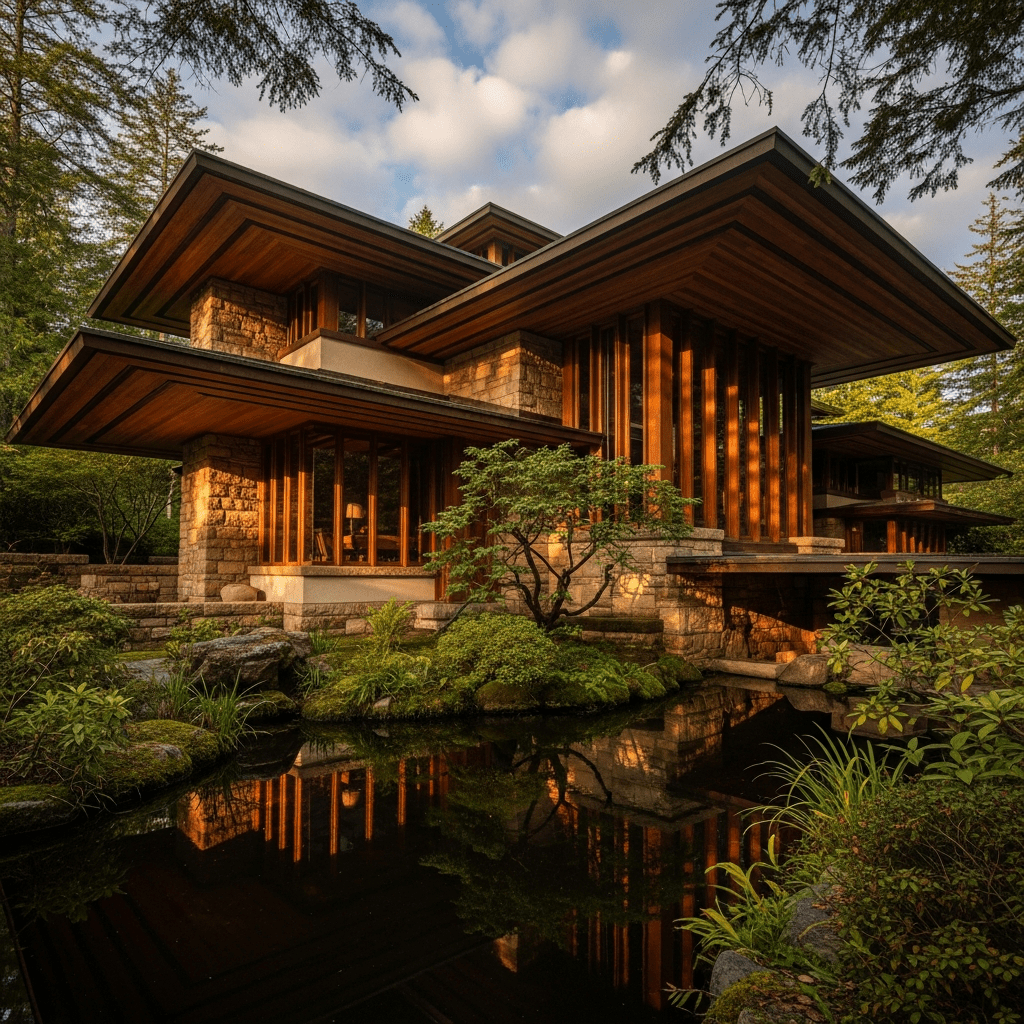
Origin Story

Organic Architecture originated in the United States in the early 20th century, emerging as a response to both historicist styles and the industrial rigidity of early Modernism. Frank Lloyd Wright first articulated its foundational principles, advocating for buildings that reflect and blend with their environments. Over time, the movement evolved, spreading globally and inspiring regional adaptations and contemporary interpretations.

Classification

This style belongs to the Modern Architecture school, standing apart from both traditional historicist and strictly functionalist modernist approaches. Organic Architecture is recognized as a distinct style, with substyles such as Wrightian Organic and Neo-Organic, and is closely related to movements like Expressionism and Sustainable Architecture.

Appearance or Form

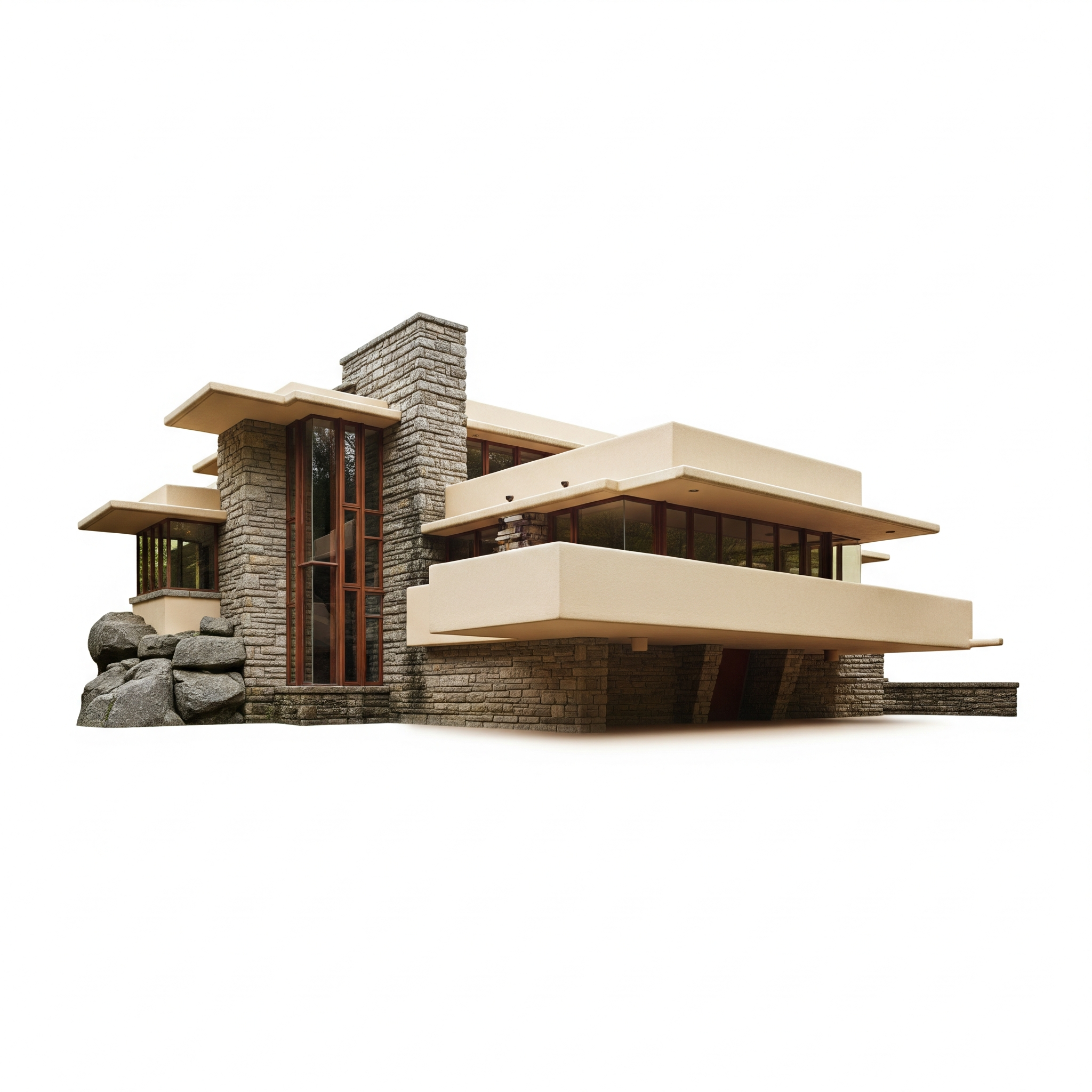
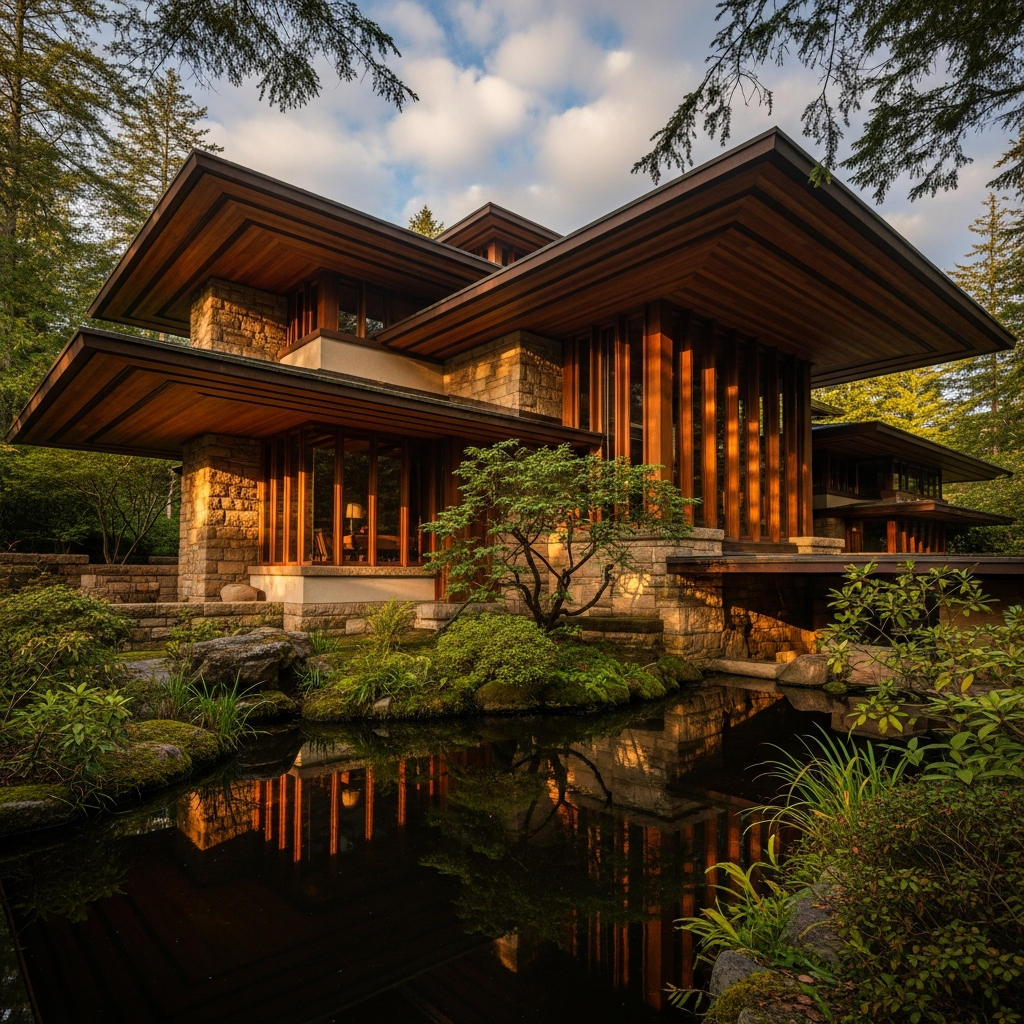
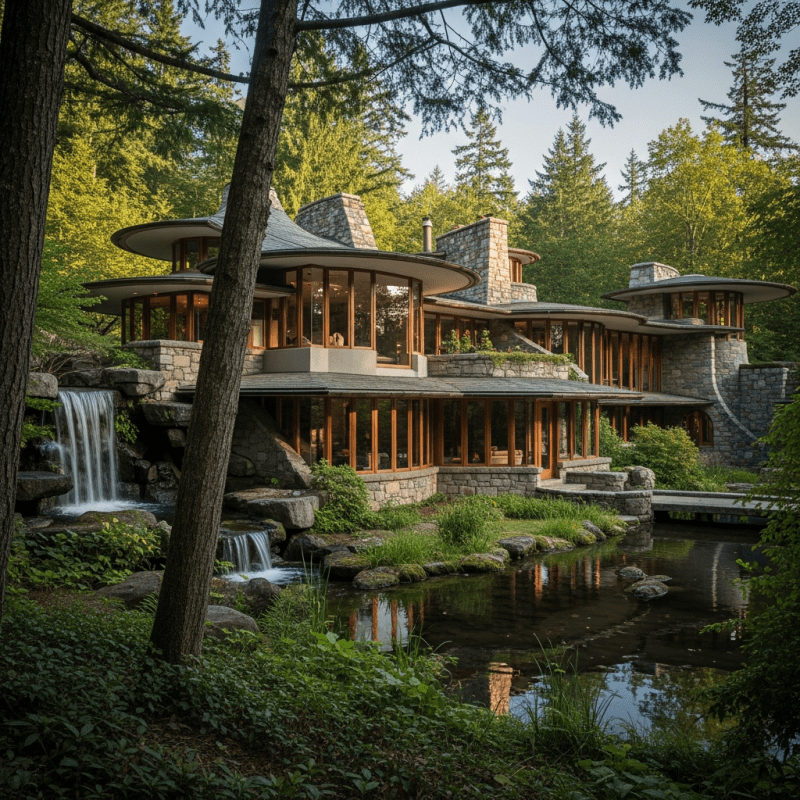
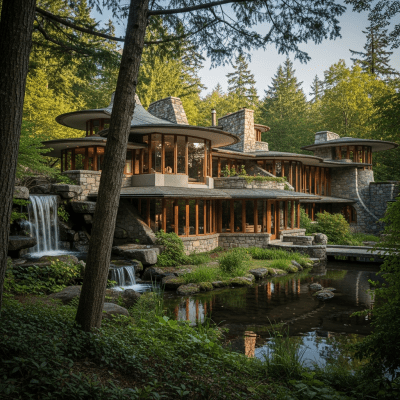
Organic Architecture is visually defined by flowing, curvilinear shapes, open plans, and a deliberate avoidance of rigid symmetry. Buildings often echo natural forms—shells, leaves, rocks—and use tactile, local materials like stone, wood, and brick. Interiors and exteriors are interrelated, with large windows, terraces, and fluid transitions that blur the boundary between built and natural environments.

Behavior or Usage

Structures designed in the organic tradition are intended to function as living organisms, with spaces that adapt to their surroundings and occupants. Common typologies include residences, religious buildings, cultural centers, and sustainable or green buildings. The style emphasizes site-specific solutions, custom detailing, and a seamless interplay between interior and exterior spaces, fostering a deep connection between human activity and nature.

Merchandise & Prints

Bring this kind into your world � illustrated posters, mugs, and shirts.

Organic Architecture Organic Architecture Poster

Organic Architecture Poster

Archival print, museum-grade paper

Organic Architecture Organic Architecture Mug

Organic Architecture Mug

Stoneware mug, dishwasher safe

Organic Architecture Organic Architecture Shirt

Organic Architecture Shirt

Soft cotton tee, unisex sizes

Attributes & Insights

Taxon-Specific Insights

🌍Cultural Significance

Organic Architecture has become a touchstone for environmentally conscious design and is celebrated for its visionary approach to blending culture, art, and nature. Iconic works like Fallingwater and the Sydney Opera House are recognized worldwide, and the style’s influence extends into contemporary sustainable architecture and biophilic design. Its principles inspire both architects and artists, symbolizing harmony, innovation, and respect for the natural world.

📌Notable Facts

  • Frank Lloyd Wright’s Fallingwater is often cited as the quintessential example of Organic Architecture.
  • Some organic buildings, such as Gaudí’s works in Barcelona, are UNESCO World Heritage sites.
  • The movement’s philosophy—“form and function are one”—continues to shape modern sustainable design globally.
  • Organic Architecture has inspired regional variants like Bio-architecture in Latin America and Vernacular Organic in indigenous contexts.

🗺️Period And Region

Organic Architecture originated in the United States around 1908 and has remained influential through the present day. While its roots are American, the style has diffused globally, with notable works and practitioners in Europe, Latin America, Australia, Japan, Malaysia, and Mexico.

Visual Variations

High quality, studio-style photograph of a single Organic Architecture from the architecture taxonomy
A wide-angle photograph of Organic Architecture, a type of architecture, situated in its typical environment or setting
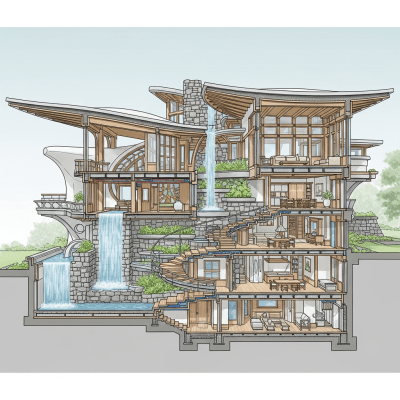
Detailed cross-sectional illustration or cutaway view showing the internal layout and key structural elements of the Organic Architecture (architecture)
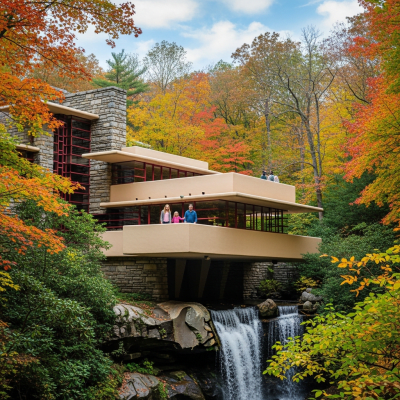
Photograph depicting Organic Architecture, an example of architecture, in active use or cultural context—such as being inhabited, visited, or used for its intended purpose—while keeping focus on the structure itself
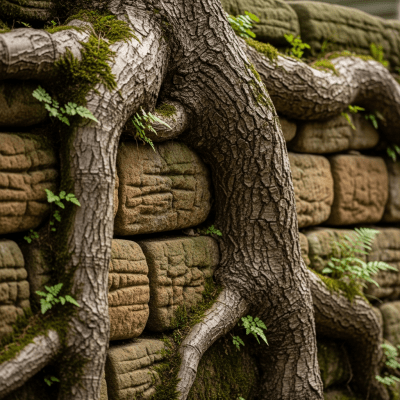
Close-up detail shot of a distinctive feature or ornamentation from the Organic Architecture (architecture), showing material texture, craftsmanship, or unique design elements

Composition & Context

Taxon-Specific Insights

✨Key Characteristics

  • Harmonious integration with natural surroundings
  • Flowing, curvilinear forms and open plans
  • Use of local, natural materials
  • Inspiration from natural geometries
  • Fluid transitions between interior and exterior
  • Site-specific, custom design
  • Philosophy of unity between form and function

🧱Materials And Techniques

Organic Architecture typically employs local, natural materials such as stone, wood, brick, and concrete, chosen for their tactile and visual qualities. Construction techniques include cantilevering, integration of built and natural elements (like water or rock outcrops), custom detailing, and designs tailored to the specific site and environment.

🏛️Notable Works

  • Fallingwater (Frank Lloyd Wright, Pennsylvania, USA, 1935)
  • Taliesin West (Frank Lloyd Wright, Arizona, USA, 1937)
  • Unity Temple (Frank Lloyd Wright, Illinois, USA, 1908)
  • Bavinger House (Bruce Goff, Oklahoma, USA, 1950)
  • Casa Batlló (Antoni Gaudí, Barcelona, Spain)
  • Sagrada Família (Antoni Gaudí, Barcelona, Spain)
  • Sydney Opera House (Jørn Utzon, Australia, 1973)

👷‍♂️Notable Practitioners

  • Frank Lloyd Wright
  • Bruce Goff
  • Antoni Gaudí
  • Jørn Utzon
  • Ken Yeang
  • Javier Senosiain
  • Toyo Ito

🔗Influences And Related Styles

Organic Architecture draws inspiration from the Arts and Crafts Movement, Japanese architecture, Prairie School, Art Nouveau, and indigenous building traditions. It is related to styles such as Expressionism, Deconstructivism, Sustainable Architecture, and Biophilic Design. Contemporary green architecture often incorporates organic principles for ecological integration.

🌍Regional Variants

  • Bio-architecture (Latin America, Europe): Emphasizes biological forms and ecological integration.
  • Green Organic: Focuses on sustainable and environmentally friendly design.
  • Vernacular Organic: Integrates indigenous building traditions and materials for local adaptation.

🏅Heritage And Recognition

Many organic buildings are officially recognized and protected as heritage sites. Frank Lloyd Wright’s works, including Fallingwater and Taliesin West, as well as Gaudí’s buildings in Barcelona, are inscribed on the UNESCO World Heritage List for their architectural significance. The movement is acknowledged by leading architectural bodies such as AIA, RIBA, and DOCOMOMO, and ongoing preservation efforts seek to maintain these unique structures despite challenges posed by their innovative forms and materials.

Faq

  • What defines Organic Architecture?
    It is characterized by buildings that harmonize with their natural surroundings, using flowing forms and local materials inspired by nature.
  • Who is the most famous organic architect?
    Frank Lloyd Wright is most closely associated with the movement, though many others have contributed globally.
  • Is Organic Architecture still relevant today?
    Yes, its principles influence contemporary sustainable and green building practices worldwide.